Two builds, two opposite problems
A slim man needs more volume at the shoulders and chest; a fuller man needs less volume at the midsection and more vertical lines. The two goals are opposite, so one formula cannot serve both. This article treats each build separately. For general suggestions by wedding color scheme, see how to choose a groom's suit by build; here we go deeper into cutting and tailoring details.
A slim groom
What to do
- Choose a jacket with light shoulder padding and a full chest, so the structure "holds up" the body. A shoulder that is too soft and unpadded makes you look thinner.
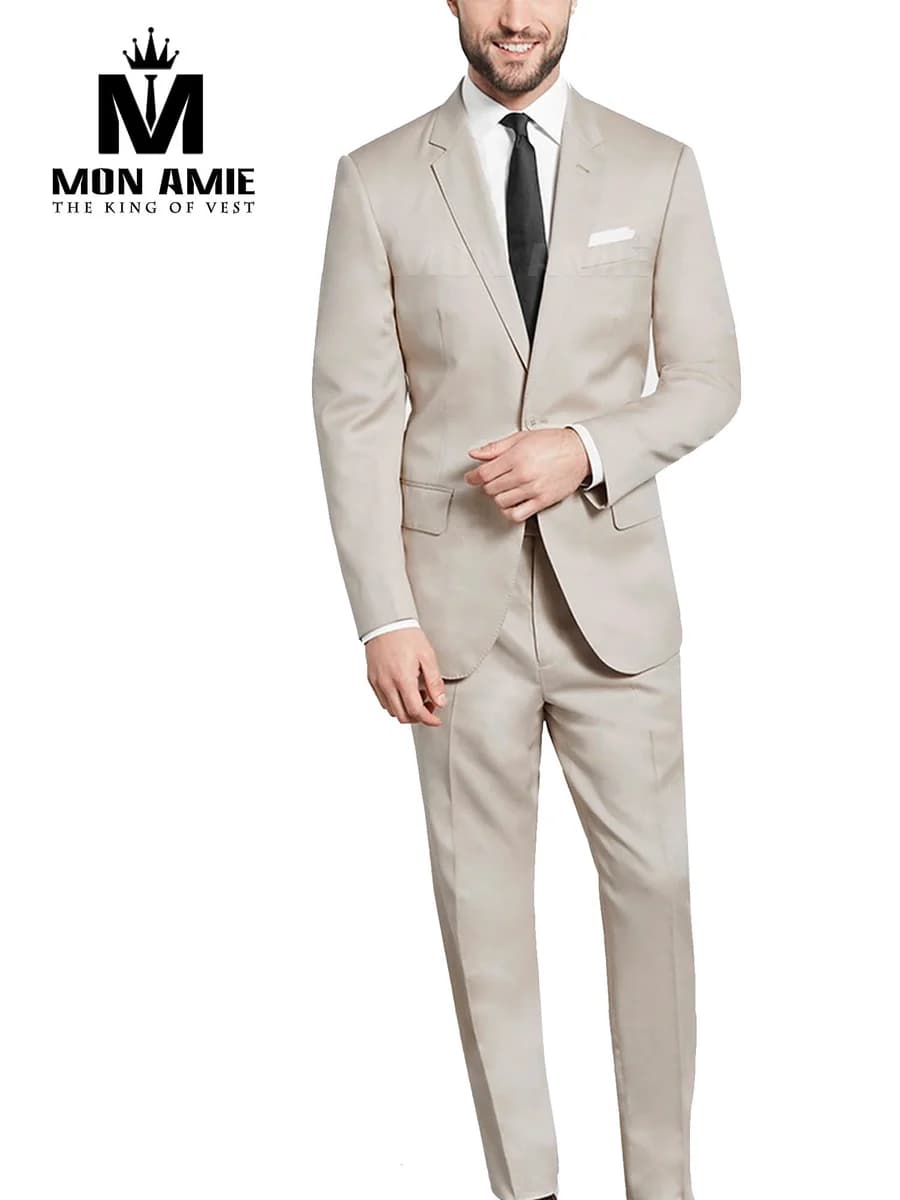
- Use a medium to slightly wide lapel (a medium-width notch lapel), which makes the chest look broader.
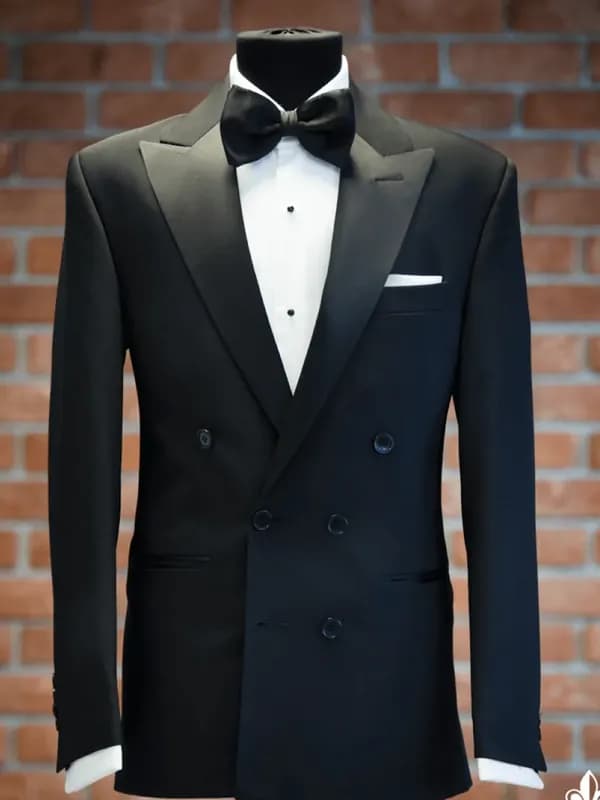
- Choose a two-button jacket or a neat double-breasted one; the double-breasted front adds a layer of fabric across the chest.
- Choose a medium-weight fabric with some drape. Fabric that is too thin clings; fabric that is too stiff looks like you are wearing someone else's jacket.
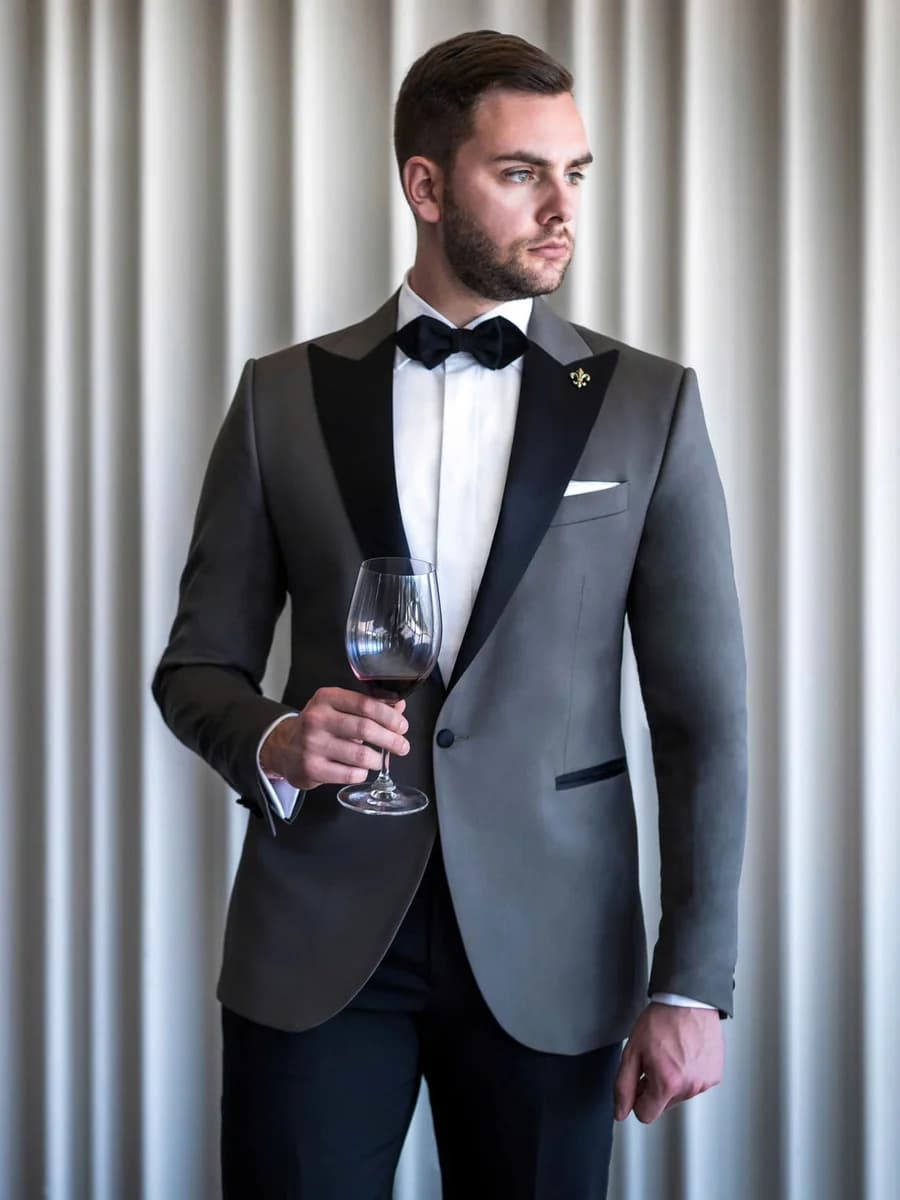
- Medium grey, bluish grey, lighter navy and warm brown work well. Small checks or a light stripe also add volume.
- A waistcoat or a three-piece suit adds a layer to the torso and suits a slim build very well.
What to avoid
A jacket that is too loose, flared trousers, head-to-toe jet black (you look like a thin black column), and very fine vertical stripes that make you look smaller.
A fuller-built groom
What to do
- Choose a jacket that fits the shoulders and is not too tight at the midsection. An X-shaped crease around the button is a sign the jacket is too tight; let the jacket sit lightly on the body and fasten the button comfortably.
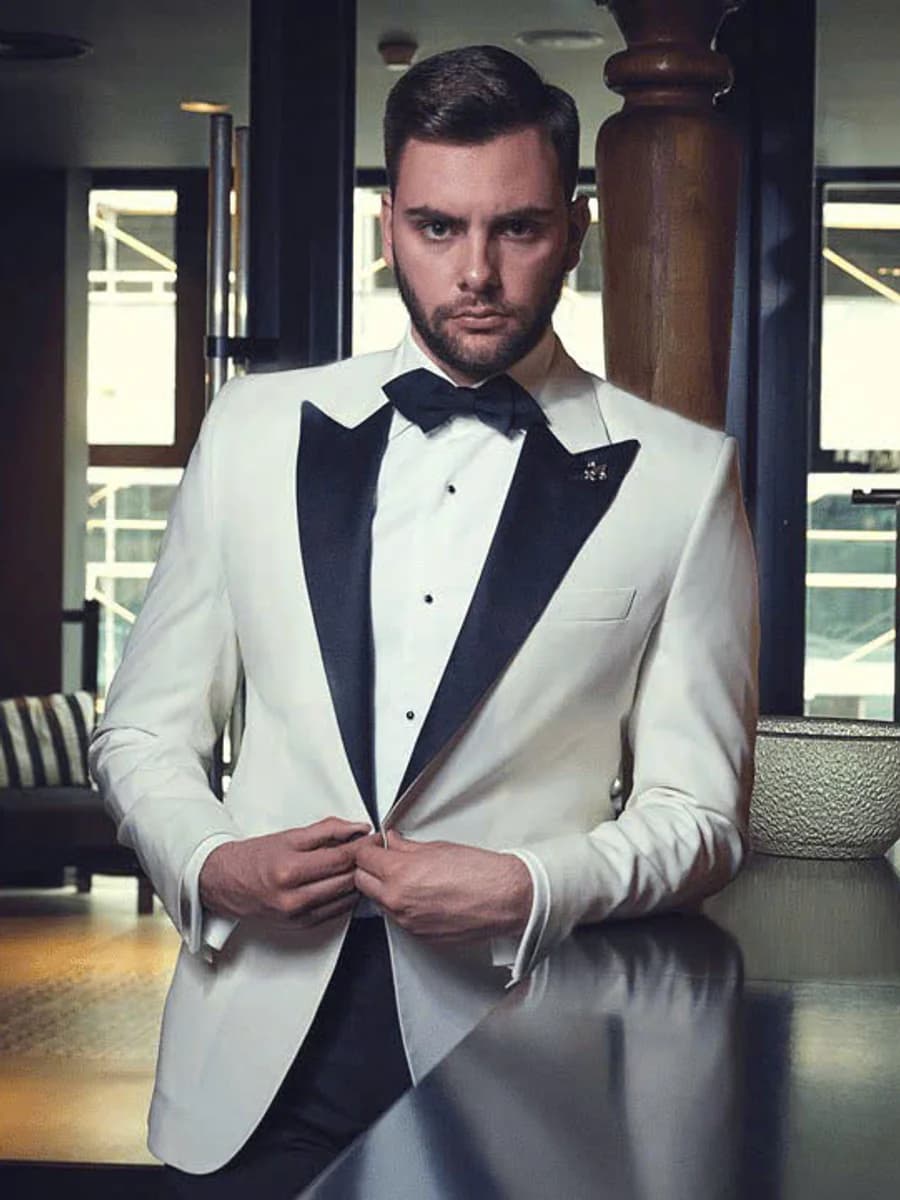
- A peak lapel or a medium notch lapel creates a V shape that lengthens the upper body. Avoid lapels that are too wide.
- One button or two buttons, fastening the upper one; a fastening point a little above the navel extends the vertical line.
- Even, dark colors: deep navy, charcoal, black. Keep the contrast between shirt, tie and jacket low to create one continuous line.
- A waistcoat in the same color as the suit helps cover the midsection and makes the torso look neater, as long as it fits and is not tight.
- A fabric thick enough to hold its shape and not follow every fold at the midsection.
What to avoid
A jacket that is too short (it exposes the seat and draws attention to the midsection), low-rise trousers (the belly spills over), horizontal stripes, large flap pockets on both sides of the belly, and a tie that is too short and sits off-center over the belly.
Quick comparison
| Detail | Slim build | Fuller build |
|---|---|---|
| Shoulders | Lightly padded, wide enough | Fitted, little padding |
| Lapel | Medium width | Peak or medium |
| Buttons | Two buttons, or double-breasted | One or two buttons |
| Color | Lighter neutrals | Even, dark tones |
| Waistcoat | Adds volume | Covers the midsection, same color |
Illustrative example
Illustrative example: a tall, very slim groom tries a black slim-cut suit and feels he has become "just a stick". Switching to a charcoal suit with light shoulder padding and a waistcoat can make him look fuller without changing anything about his body. Another groom with a fuller build likes a light grey suit; after trying on, a deep navy suit cut to fit the midsection may give a neater face line and a longer-looking figure.
Alterations are normal
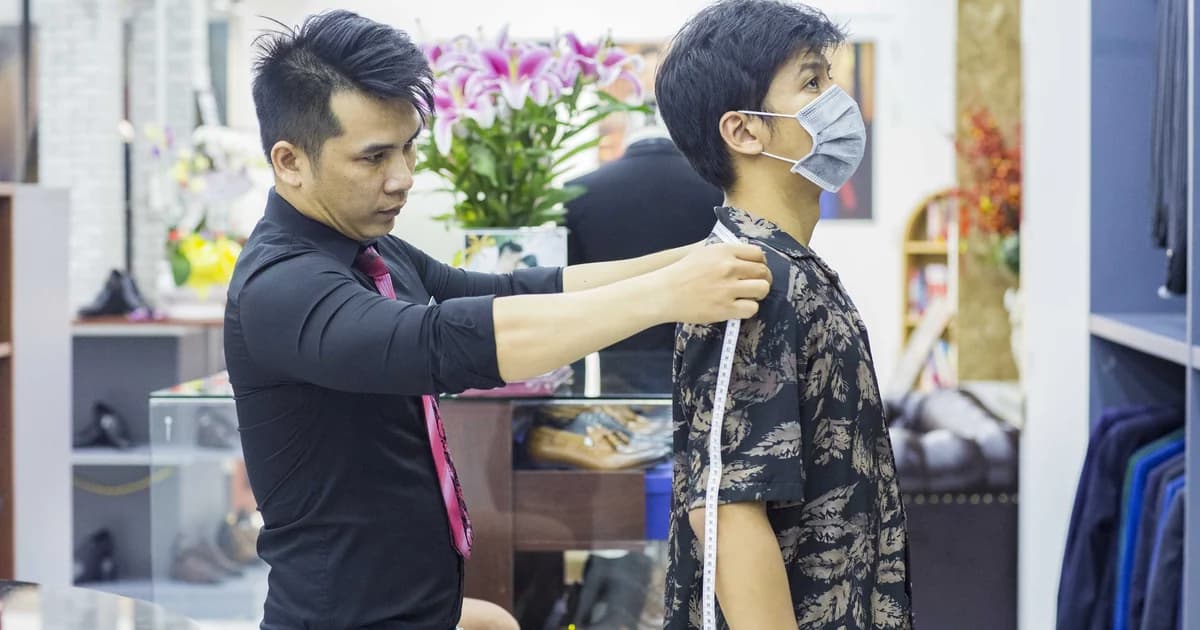
Do not hesitate to ask for adjustments. Mon Amie adjusts free of charge, as far as possible, to fit you; shoulders and lapels are hard to change much, so choose the right size first. See also what free suit alterations cover and our suggestions for shorter and taller grooms.
Try a few suits to see the difference yourself
The mirror speaks faster than advice. Message us on Zalo at 0888.111.118 with your height, weight and the style of your reception, and staff will pick a few suits from the suit rental catalog for you to try on in person at a showroom.